
SANJANA VK
Digital Marketer
How Social Media Marketing Helps Businesses Grow Online
Connect, Engage, and Grow Your Audience
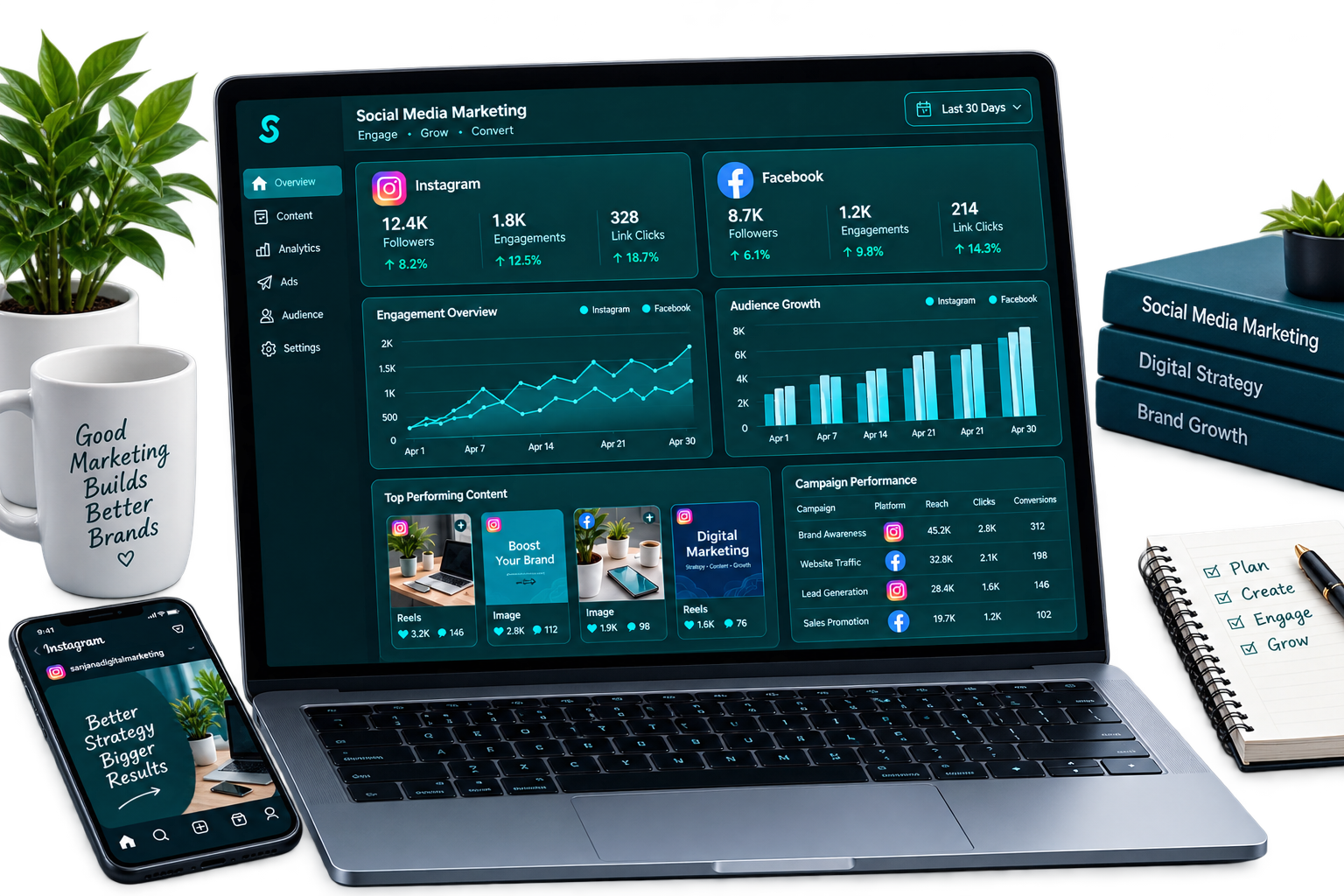
Social media has become one of the most powerful tools for businesses to connect with customers, build brand awareness, and increase sales. Platforms like Instagram, Facebook, LinkedIn, and YouTube allow businesses to reach their target audience, share valuable content, and develop strong customer relationships.
With the right social media marketing strategy, businesses of all sizes can improve their online presence, attract potential customers, and achieve long-term growth.
What Is Social Media Marketing?
Social media marketing is the process of promoting a business, product, or service through social media platforms. It involves creating engaging content, managing social media accounts, interacting with followers, and running paid advertising campaigns.
The main goal of social media marketing is to connect with the right audience, increase brand visibility, generate leads, and encourage customers to take action.
Why Is Social Media Marketing Important for Businesses?
Social media marketing helps businesses reach potential customers where they spend time online. A consistent and well-planned strategy can improve brand recognition and support business growth.
1. Increase Brand Awareness
Social media allows businesses to introduce their brand to a wider audience. By sharing useful posts, creative graphics, videos, and updates, businesses can help more people discover their products and services.
Consistent branding and valuable content make it easier for customers to recognize and remember your business.
2. Reach Your Target Audience
Social media platforms provide opportunities to connect with people based on their interests, location, demographics, and online behavior. Understanding your target audience helps you create content that matches their needs and interests.
When your content reaches the right people, it becomes easier to build meaningful relationships and attract potential customers.
3. Improve Customer Engagement
Social media makes communication between businesses and customers easier. Comments, messages, polls, stories, and live videos give audiences opportunities to interact directly with your brand.
Responding to questions and feedback helps build trust and encourages customers to stay connected with your business.
4. Generate Leads and Increase Sales
Social media can help businesses generate enquiries and guide potential customers toward a purchase. By sharing product information, customer testimonials, special offers, and clear calls to action, businesses can encourage users to visit their website or contact them directly.
Paid social media advertising can also help businesses reach specific audiences and promote their products or services.
5. Build Customer Trust
Customers are more likely to trust a business that communicates consistently and shares authentic information. Posting helpful tips, behind-the-scenes content, customer reviews, and project results can demonstrate your expertise and build credibility.
Strong customer relationships can contribute to repeat purchases and long-term loyalty.
Types of Graphic Design Used in Digital Marketing
Businesses use different types of graphic design depending on their marketing objectives.
Logo and Brand Identity Design: Creates a recognizable visual identity for a business.
Social Media Graphic Design: Includes posts, stories, reels covers, carousel graphics, and promotional creatives.
Website Graphic Design: Covers website banners, icons, illustrations, and other visual elements that support user experience.
Digital Advertising Design: Includes creative assets for Google Display Ads, Facebook Ads, and Instagram Ads.
Email Marketing Design: Uses attractive email layouts, promotional banners, and visual elements to communicate with subscribers.
Infographic Design: Presents statistics, processes, and complex information in a simple visual format.
Best Social Media Platforms for Business Marketing
Choosing the right platform depends on your business goals, target audience, and the type of content you create.
Instagram Marketing
Instagram is useful for sharing reels, stories, carousels, product photos, and creative graphics. It is particularly helpful for businesses that want to build a visual brand identity and engage with their audience.
Facebook Marketing
Facebook helps businesses build communities, share updates, promote events, communicate with customers, and run targeted advertising campaigns.
LinkedIn Marketing
LinkedIn is suitable for professional networking, B2B marketing, industry insights, and building credibility among business owners and professionals.
YouTube Marketing
YouTube allows businesses to share tutorials, product demonstrations, educational videos, and customer success stories. Video content can help explain complex services and build audience trust.
Effective Social Media Marketing Strategies
A successful social media presence requires more than simply posting content. Businesses need a clear strategy and regular performance analysis.
1. Set Clear Marketing Goals
Before creating content, identify what you want to achieve. Your goals might include increasing brand awareness, growing engagement, generating leads, driving website traffic, or increasing sales.
Clear goals help you choose suitable content and measure your results.
2. Create Valuable and Engaging Content
Publish content that educates, entertains, or helps your audience. You can share industry tips, how-to guides, frequently asked questions, customer testimonials, short videos, and informative graphics.
Focus on providing value instead of promoting your products or services in every post.
3. Maintain a Consistent Posting Schedule
Consistency helps your audience stay familiar with your brand. Create a monthly content calendar to plan topics, captions, graphics, reels, and promotional posts in advance.
Choose a posting schedule that you can maintain while ensuring your content remains relevant and useful.
4. Use High-Quality Visuals
Creative graphics, clear images, and engaging videos can help communicate your message effectively. Maintain consistent colors, fonts, and design elements to create a recognizable brand identity.
Professional visual content can make your social media profiles look more trustworthy and organized.
5. Use Paid Social Media Advertising
Organic content helps build relationships over time, while paid advertising can expand your reach and target specific audiences. Facebook and Instagram advertising can support objectives such as brand awareness, website visits, enquiries, and sales.
Start with a clear goal, select an appropriate audience, set a realistic budget, and monitor campaign performance regularly.
6. Track and Improve Performance
Review your social media analytics to understand which content performs best. Important metrics include reach, impressions, engagement rate, profile visits, link clicks, leads, and conversions.
Use these insights to improve your content strategy and make better marketing decisions.
Common Social Media Marketing Mistakes to Avoid
Businesses can limit their results by making avoidable mistakes. Some common examples include:
Posting without a clear strategy or goal.
Ignoring comments and customer messages.
Using inconsistent branding and visual styles.
Focusing only on follower counts instead of meaningful results.
Publishing overly promotional content.
Failing to review analytics and campaign performance.
Trying to manage every platform without understanding the target audience.
Avoiding these mistakes can help businesses build a stronger and more effective social media presence.
How Sanjana Digital Marketing Can Help Your Business
At Sanjana Digital Marketing, the focus is on helping businesses strengthen their online presence through strategic digital marketing solutions. From social media strategy and creative content to account management and paid advertising, the right approach can help your brand connect with its target audience.
Every business has different goals, which is why social media marketing should be planned around your audience, industry, budget, and desired results.
Whether you want to increase brand awareness, improve engagement, generate leads, or drive more traffic to your website, a well-planned social media strategy can support your business growth.
Grow Your Business with Social Media Marketing
Social media marketing is more than posting pictures and sharing updates. It is about building relationships, communicating your brand value, and connecting with the right customers through meaningful content.
With a clear strategy, consistent posting, engaging visuals, and regular performance analysis, businesses can improve their online visibility and create more opportunities for growth.
Ready to strengthen your online presence? Connect with Sanjana Digital Marketing to explore social media marketing strategies tailored to your business goals.
Frequently Asked Questions
1. What is social media marketing?
Social media marketing involves using platforms such as Instagram, Facebook, LinkedIn, and YouTube to promote a business, engage with customers, and achieve marketing goals.
2. How does social media marketing help businesses?
It can increase brand awareness, improve customer engagement, drive website traffic, generate leads, and support sales.
3. How often should a business post on social media?
Posting frequency depends on the platform, audience, and available resources. A consistent and sustainable schedule with quality content is more valuable than posting frequently without a clear plan.
4. Is social media marketing suitable for small businesses?
Yes. Small businesses can use social media to showcase their services, connect with local customers, build trust, and promote their products within their marketing budget.
5. How long does social media marketing take to show results?
Results vary depending on the strategy, industry, competition, content quality, and budget. Organic growth usually requires consistency over time, while paid campaigns may generate measurable activity sooner.