
SANJANA VK
Digital Marketer
How Email Marketing Helps Businesses Generate Leads and Increase Sales
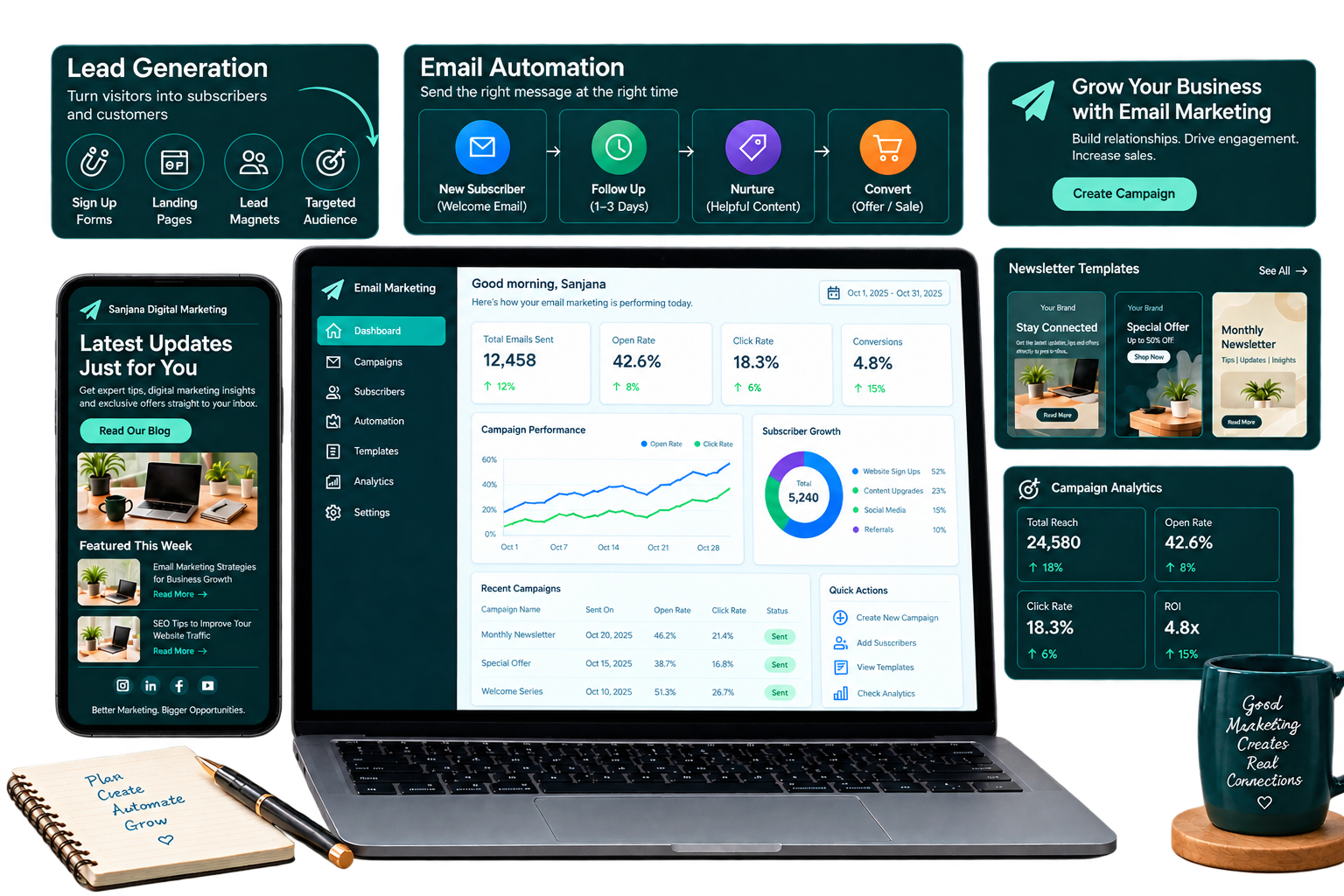
In the competitive online marketplace, businesses need smart ways to attract potential customers and turn them into loyal clients. Email marketing is an effective digital marketing strategy that helps businesses connect with their audience, share valuable information, and promote their products or services directly through email.
With the right email marketing strategy, businesses can nurture leads, build customer trust, increase website traffic, and improve sales. Whether you are a startup, small business owner, or established company, email marketing can become an important part of your digital marketing success.
What Makes Email Marketing a Powerful Marketing Tool?
Email marketing allows businesses to communicate directly with people who have chosen to receive their updates. Unlike many other marketing channels, email campaigns can be personalized according to customer interests, preferences, and previous interactions.
Businesses can use email marketing to introduce new services, announce special offers, share educational content, and maintain long-term relationships with customers. This makes it a valuable strategy for building brand awareness and encouraging repeat business.
7 Benefits of Email Marketing for Business Growth
1. Generate Quality Leads
Email marketing helps businesses collect leads through newsletter subscriptions, website forms, and valuable downloadable resources. These leads can receive relevant information that encourages them to explore your services.
2. Build Brand Awareness
Regular emails help your audience become familiar with your brand, services, and expertise. Consistent communication can help your business remain recognizable when customers need your products or services.
3. Increase Customer Engagement
Sharing helpful content, updates, and personalized offers encourages subscribers to interact with your business. Relevant emails can help maintain an ongoing connection with your audience.
4. Improve Customer Retention
Email campaigns help businesses stay connected with existing customers. Follow-up messages, useful recommendations, and exclusive updates can encourage customers to return.
5. Promote Products and Services
Businesses can use email campaigns to introduce new products, promote seasonal offers, announce service updates, and direct customers to relevant website pages.
6. Automate Marketing Activities
Email automation allows businesses to send messages based on specific actions or schedules. Welcome emails, follow-up emails, and customer reminders can be delivered automatically, reducing repetitive manual work.
7. Measure Campaign Performance
Email marketing platforms provide data about email delivery, clicks, conversions, and unsubscribes. Analysing these metrics helps businesses understand what works and improve their future campaigns.
What Is Email Marketing Automation?
Email marketing automation is the process of sending emails automatically according to a subscriber’s actions, preferences, or position in the customer journey.
For example, when someone subscribes to your website newsletter, they can automatically receive a welcome email. If a potential customer enquires about your services, an automated follow-up can provide additional information.
Common email automation workflows include:
Welcome email sequences for new subscribers.
Follow-up emails for potential customers.
Abandoned cart reminders for online stores.
Birthday or anniversary emails where appropriate.
Re-engagement campaigns for inactive subscribers.
Post-purchase emails requesting feedback or sharing useful guidance.
Automation helps businesses deliver timely and relevant communication while maintaining a consistent customer experience.
How to Create Email Campaigns That Convert
Creating successful email campaigns requires more than writing an attractive message. Your content should be relevant, easy to understand, and designed around a clear marketing goal.
Understand Your Target Audience
Identify your audience’s needs, interests, and challenges. This helps you create emails that provide genuine value rather than sending generic promotional messages.
Create Compelling Subject Lines
Write subject lines that clearly communicate the value of your email. Keep them concise, relevant, and honest so subscribers know what to expect.
Focus on Valuable Content
Provide useful tips, product information, industry updates, and solutions to customer problems. A helpful email can build trust and encourage readers to engage with your business.
Use a Clear Call to Action
Every marketing email should guide readers toward a specific next step. Depending on your goal, you might invite them to read a blog post, explore a service, request a quotation, or purchase a product.
Optimize Emails for Mobile Devices
Many people read emails on smartphones. Use a responsive design, readable text, clear headings, and easily accessible links to provide a smooth mobile experience.
Test and Improve Your Campaigns
Experiment with different subject lines, email layouts, and calls to action. Compare the results and use the findings to improve future campaigns.
Email Marketing vs Social Media Marketing
Both email marketing and social media marketing help businesses connect with their audiences, but they serve different purposes.
Email marketing supports direct communication with subscribers and allows businesses to deliver targeted messages. Social media marketing helps brands increase visibility, publish engaging content, and discover new audiences.
A strong digital marketing strategy combines both channels. For example, you can promote your latest blog posts on social media and use email newsletters to share those articles with interested subscribers.
Best Email Marketing Tools for Businesses
Choosing the right email marketing platform can make campaign management easier.
Mailchimp: Useful for creating email campaigns, managing subscribers, and monitoring performance.
Brevo: Offers email campaigns, automation features, and contact management tools.
HubSpot: Provides email marketing features alongside CRM and marketing automation capabilities.
Before selecting a tool, consider your budget, subscriber list size, automation needs, integrations, and reporting requirements. Features and pricing can vary by plan.
Common Email Marketing Mistakes Businesses Should Avoid
To build a successful email marketing strategy, avoid these common mistakes:
Sending emails without appropriate permission.
Using misleading subject lines.
Sending too many promotional messages.
Ignoring mobile-friendly design.
Sending the same content to every subscriber.
Forgetting to include a clear call to action.
Failing to monitor campaign performance.
Making it difficult for subscribers to unsubscribe.
Focus on relevant communication, respect subscriber preferences, and follow applicable email marketing and data protection requirements.
The Future of Email Marketing
Email marketing continues to evolve as businesses adopt personalization, automation, audience segmentation, and data-driven campaign planning.
Businesses can use customer preferences and engagement data to deliver more relevant content. Automation can improve communication throughout the customer journey, while testing and analytics can help marketers make informed decisions.
However, successful email marketing still depends on understanding people, providing useful information, and building genuine customer relationships.
explore digital marketing strategies tailored to your business goals.
Email marketing remains a valuable strategy for businesses that want to generate leads, increase customer engagement, and support long-term growth. By combining personalized content, effective automation, and performance tracking, businesses can create campaigns that serve their audience and support their marketing goals.
At Sanjana Digital Marketing, we understand the importance of using effective digital marketing strategies to help businesses build their online presence and connect with the right audience.
Want to grow your business online? Contact Sanjana Digital Marketing to explore digital marketing strategies tailored to your business goals.
Frequently Asked Questions
1. Can email marketing help generate leads?
Yes. Email marketing can nurture interested subscribers by sharing useful information, introducing services, and encouraging them to take the next step.
2. What is the main purpose of email automation?
Email automation helps businesses send timely messages automatically based on subscriber actions, preferences, or schedules.
3. Is email marketing suitable for startups?
Yes. Startups can use email marketing to build an audience, introduce their services, nurture leads, and maintain customer relationships.
4. How do I measure email marketing success?
Track relevant metrics such as delivery rate, click-through rate, conversions, unsubscribes, and revenue where applicable.
5. How can I build an email subscriber list?
Use website subscription forms, newsletter sign-ups, and other permission-based methods to attract people who are interested in your content or services.
6. Does email marketing help increase sales?
It can help increase sales by promoting relevant products, nurturing potential customers, and encouraging repeat purchases. Results depend on the audience, offer, content, and campaign strategy.