
SANJANA VK
Digital Marketer
Google Ads & Paid Advertising: A Complete Guide to Growing Your Business Online
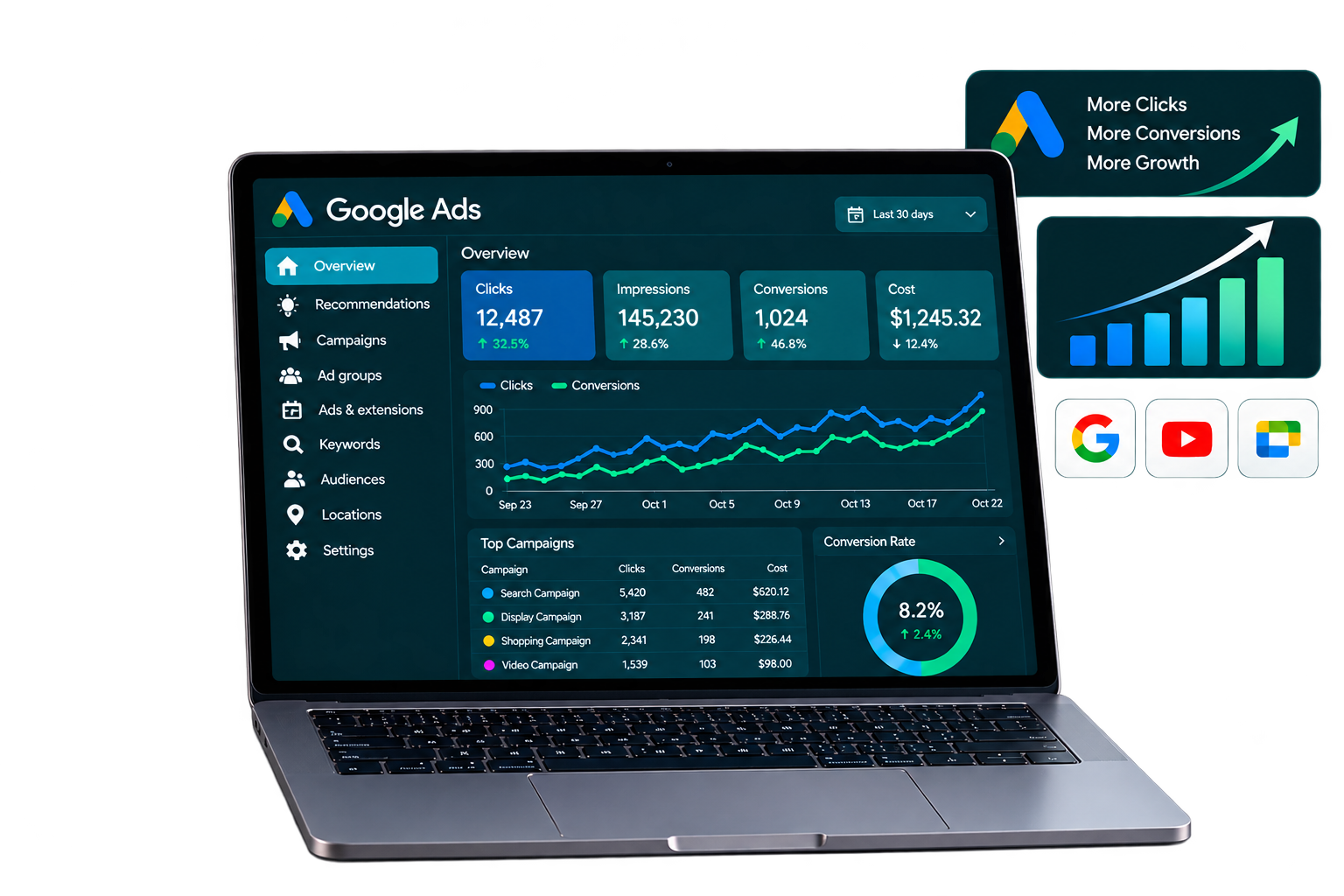
In today’s competitive digital world, businesses need effective ways to reach their target audience and attract potential customers. Google Ads and paid advertising help businesses promote their products and services online, increase website traffic, generate quality leads, and improve sales.
Whether you own a small business, an e-commerce store, or a growing company, paid advertising can help you connect with people who are actively searching for what you offer. With the right strategy, audience targeting, and campaign optimization, you can make better use of your advertising budget and achieve measurable results.
In this blog, we will explore Google Ads, different types of paid advertising, their benefits, and how businesses can use them to grow online.
What Is Google Ads?
Google Ads is an online advertising platform that allows businesses to display advertisements across Google’s advertising network. Businesses can reach potential customers when they search for relevant products or services on Google.
For example, if someone searches for “best digital marketing services near me,” a business running a relevant Google Search campaign may appear among the sponsored results.
Google Ads allows advertisers to choose keywords, set budgets, define target audiences, and measure campaign performance. Advertisers can use different bidding strategies depending on their business objectives.
What Is Paid Advertising in Digital Marketing?
Paid advertising is a digital marketing strategy in which businesses pay to promote their products, services, or content through online platforms.
Popular paid advertising platforms include Google Ads, Facebook Ads, and Instagram Ads. Each platform offers different ways to reach potential customers based on their interests, search behaviour, demographics, and online activities.
Paid advertising can help businesses increase brand awareness, attract website visitors, generate leads, and encourage customers to make purchases.
Types of Google Ads Campaigns
1. Google Search Ads
Google Search Ads appear on Google search results pages when users search for relevant keywords. They are particularly useful for reaching people who are already interested in a specific product or service.
For example, a person searching for “website design services in Kerala” may see advertisements from businesses offering website development.
2. Google Display Ads
Display Ads use visual advertisements, such as banners and images, across eligible websites and apps in Google’s Display Network. They can help businesses build brand awareness and reconnect with relevant audiences.
3. Google Shopping Ads
Google Shopping Ads showcase product images, prices, store names, and other product information. They are especially useful for e-commerce businesses that want to promote their products to potential buyers.
4. Performance Max Campaigns
Performance Max is a goal-based campaign type that uses Google’s advertising inventory and automation to help advertisers achieve objectives such as sales and lead generation across eligible Google channels.
5. Video Ads
Video Ads help businesses promote their products and services through video content on YouTube and other eligible placements. They can support brand awareness, product promotion, and customer engagement.
Benefits of Google Ads for Businesses
Reach Your Target Audience
Google Ads allows businesses to target relevant searches, locations, languages, and audiences. This helps you focus your advertising efforts on potential customers who are more likely to be interested in your offerings.
Generate Quality Leads
Well-planned campaigns can attract people who are actively looking for your services. By directing them to a relevant landing page with a clear call to action, you can encourage enquiries, phone calls, and form submissions.
Increase Website Traffic
Paid advertising can bring targeted visitors to your website. When your advertisements match users’ search intent, they can help attract people who are more likely to explore your products or services.
Control Your Advertising Budget
You can set campaign budgets and adjust your spending according to your business goals. However, results depend on factors such as competition, bidding strategy, audience demand, and campaign quality.
Measure Campaign Performance
Google Ads provides performance data such as impressions, clicks, conversions, and cost. When conversion tracking is configured correctly, you can use this information to understand which campaigns contribute to your business objectives.
Google Ads vs. Social Media Advertising
Google Ads and social media advertising serve different purposes. Google Search Ads can help you reach people who are actively searching for a product or service. Facebook and Instagram Ads can help you introduce your brand to relevant audiences based on interests, demographics, and other targeting options.
For example, a local service business may use Google Search Ads to attract customers searching for its services, while Instagram Ads can showcase its work to a wider audience. Using both channels together can support a balanced digital marketing strategy, depending on your goals and budget.
How to Create an Effective Paid Advertising Strategy
1. Define Your Business Goals
Before launching a campaign, decide what you want to achieve. Your objective could be increasing website traffic, generating leads, improving online sales, or building brand awareness.
2. Research Relevant Keywords
Choose keywords that match your products, services, and customers’ search intent. Consider relevant long-tail keywords to reach people searching for specific solutions.
3. Understand Your Target Audience
Identify your ideal customers, their needs, their location, and the problems they want to solve. This helps you create more relevant advertisements and landing pages.
4. Write Compelling Ad Copy
Create clear, persuasive advertisements that explain your value proposition. Include relevant keywords naturally and use a strong call to action, such as “Get a Free Consultation,” “Contact Us Today,” or “Shop Now.”
5. Optimize Your Landing Pages
Your landing page should match the promise made in your advertisement. Make sure it loads quickly, works well on mobile devices, provides useful information, and makes it easy for visitors to take the next step.
6. Set Up Conversion Tracking
Track meaningful actions such as completed enquiry forms, purchases, or qualified leads. Accurate tracking helps you evaluate campaign performance and make informed decisions.
7. Monitor and Improve Campaigns
Review campaign data regularly. Test different advertisements, review search terms, adjust targeting, and identify opportunities to improve performance. Continuous optimization helps you make better use of your advertising budget.
Common Paid Advertising Mistakes to Avoid
Many businesses struggle with paid advertising because of avoidable mistakes. Here are some common issues to watch out for:
Targeting audiences that are too broad or irrelevant.
Choosing keywords without understanding search intent.
Using unclear or unappealing ad copy.
Sending visitors to irrelevant landing pages.
Ignoring conversion tracking.
Failing to review campaign performance.
Spending money on irrelevant search terms.
Expecting immediate profits without testing and optimization.
Avoiding these mistakes can help you build more focused campaigns and make better decisions about your marketing budget.
Grow Your Business with the Power of Google Ads
Ready to take your business to the next level? Google Ads and paid advertising can help you reach the right audience, attract potential customers, and create new opportunities for growth. With the right strategy and continuous optimization, you can turn advertising into a valuable investment for your business.
Let’s grow your business together! Connect with Sanjana Digital Marketing and discover the right advertising strategy to achieve your business goals.
Frequently Asked Questions
1. What is Google Ads used for?
Google Ads helps businesses promote their products and services online, attract website visitors, generate leads, and increase sales through paid advertising.
2. Is Google Ads suitable for small businesses?
Yes. Small businesses can use Google Ads by setting an appropriate budget, targeting relevant customers, and focusing on specific business goals.
3. How much does Google Ads cost?
The cost depends on your budget, industry, keyword competition, bidding strategy, and campaign goals. You can set a budget that suits your business.
4. How long does it take to see results from Google Ads?
Ads may begin receiving impressions and clicks soon after a campaign becomes eligible to run. However, generating consistent leads or sales can take longer and depends on your offer, competition, website, and campaign optimization.
5. Which is better: Google Ads or Facebook Ads?
Google Ads is useful for reaching people searching for specific products or services, while Facebook and Instagram Ads can help reach audiences based on interests and other targeting signals. The best option depends on your business goals.
6. Can Google Ads increase sales?
Yes. Google Ads can help generate sales by reaching relevant audiences. Results depend on factors such as product demand, campaign quality, pricing, landing page experience, and conversion tracking.