
SANJANA VK
Digital Marketer
10 Proven SEO Strategies to Improve Your Google Rankings in 2026
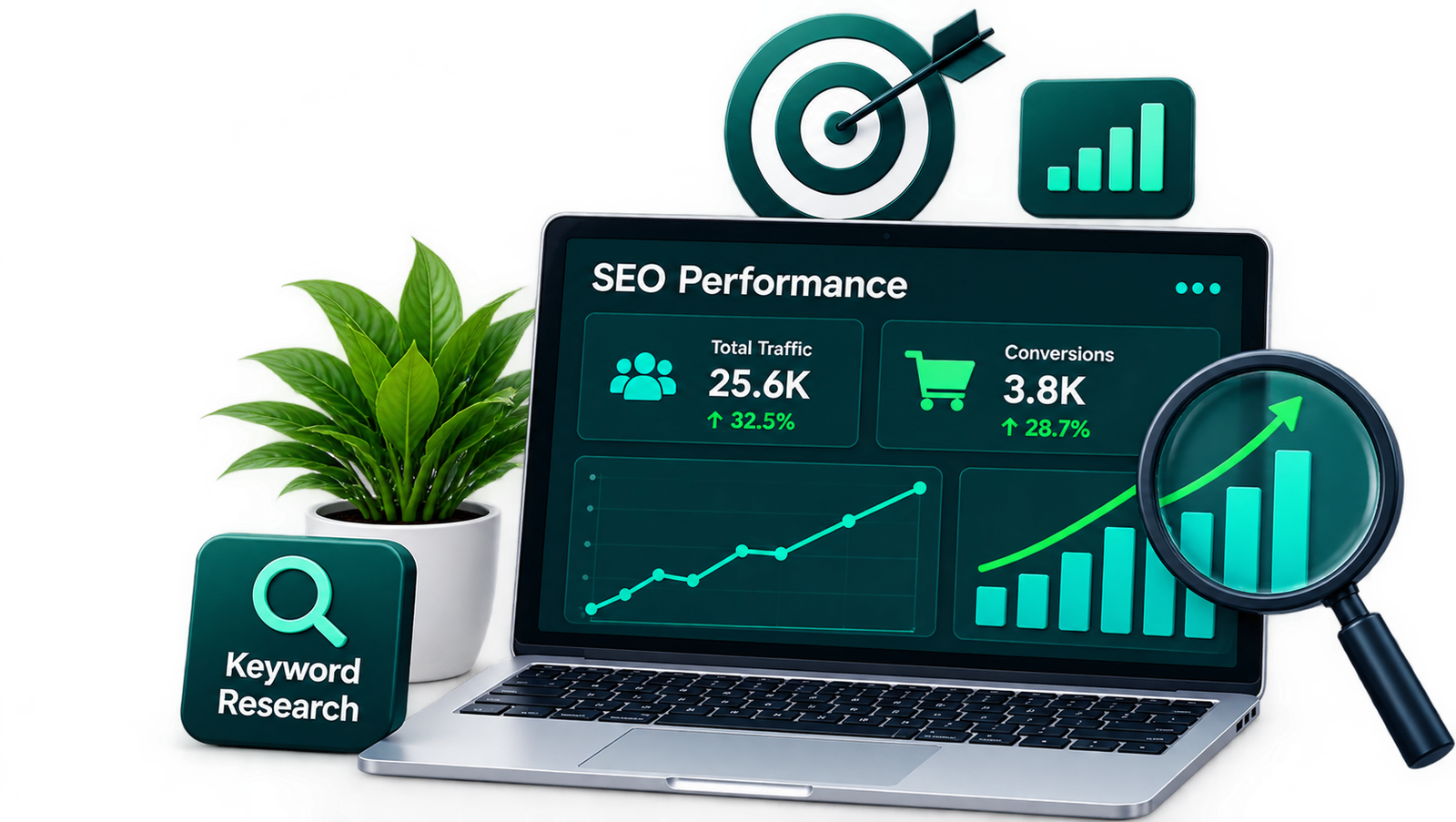
Do you want your website to appear higher in Google search results? Improving your website’s search engine rankings can help your business reach more potential customers, increase organic traffic, and build a stronger online presence.
Search Engine Optimization (SEO) is an essential part of digital marketing. It helps search engines understand your website and connect your content with people searching for relevant information, products, or services.
However, achieving better rankings requires more than adding keywords to your website. You need a well-planned strategy that combines high-quality content, technical improvements, keyword research, and a positive user experience.
In this blog, we will explore 10 practical SEO strategies that can help improve your website’s visibility and support long-term business growth.
1. Conduct Effective Keyword Research
Keyword research is the foundation of a successful SEO strategy. It helps you understand what your target audience searches for on Google.
Start by identifying keywords related to your business, products, and services.
For example, a digital marketing agency might target:
SEO services in Kerala
Digital marketing agency
Website development services
Social media marketing
Google Ads management
Local SEO services
Choose keywords based on search intent, relevance, and competition. Include both broad keywords and specific long-tail keywords to reach different audiences.
Tools such as Google Keyword Planner and Google Search Console can help you discover relevant search terms and understand how people find your website.
2. Create High-Quality, Helpful Content
Content plays an important role in SEO. Google aims to provide users with helpful, relevant information that satisfies their search needs.
Create blog posts, service pages, guides, and FAQs that answer your audience’s questions.
For example, if your website offers SEO services, you could publish blogs about keyword research, local SEO, technical SEO, and common website optimization mistakes.
Make your content original, easy to read, accurate, and useful. Avoid copying content from other websites or publishing articles solely to repeat keywords.
3. Optimize Your Website's On-Page SEO
On-page SEO helps search engines understand the topic and purpose of each page.
Important on-page SEO elements include:
SEO titles: Write unique titles that clearly describe each page.
Meta descriptions: Create engaging summaries that encourage relevant users to visit your website.
Headings: Organize information using clear H1, H2, and H3 headings.
Image optimization: Use descriptive file names and meaningful alt text.
Internal links: Connect related blog posts and service pages.
URLs: Use short, readable URLs that describe the page topic.
These improvements make your content easier to understand for both search engines and visitors.
4. Improve Website Loading Speed
Website performance affects the experience visitors have when browsing your pages.
A slow website may frustrate users and make it harder for them to explore your services.
To improve performance:
Compress large images.
Remove unnecessary plugins and scripts.
Use efficient website hosting.
Enable browser caching where appropriate.
Reduce unnecessary redirects.
Test your website using Google PageSpeed Insights.
Pay attention to Core Web Vitals, which measure aspects of loading performance, responsiveness, and visual stability.
5. Make Your Website Mobile-Friendly
Many people use smartphones to search for businesses, compare services, and read online content.
Your website should work smoothly on different screen sizes.
Make sure that text is readable, navigation is simple, images fit the screen, and buttons are easy to tap. Avoid intrusive pop-ups that make content difficult to access.
A responsive website provides a better experience for mobile visitors and supports Google’s mobile-first indexing approach.
6. Focus on Local SEO
If your business serves a particular city, town, or region, local SEO can help you reach nearby customers.
For example, businesses serving Palakkad and other areas of Kerala can create useful content relevant to their service locations.
Local SEO strategies include:
Optimizing your Google Business Profile.
Keeping your business information accurate.
Collecting genuine customer reviews.
Creating useful location-specific website pages.
Maintaining consistent business details across relevant directories.
Adding your service areas where appropriate.
Avoid creating multiple low-quality location pages with nearly identical content. Focus on providing useful information for each area you genuinely serve.
7. Build Quality Backlinks
Backlinks are links from other websites that point to your website. Relevant, trustworthy backlinks can help search engines understand your website’s reputation and relationships with other sources.
You can work toward earning backlinks by:
Publishing original research and useful guides.
Creating resources other websites may want to reference.
Building genuine relationships with relevant businesses.
Contributing useful expert insights to reputable publications.
Promoting your content through appropriate channels.
Focus on quality and relevance instead of collecting large numbers of links. Avoid spammy link schemes that attempt to manipulate search rankings.
8. Improve Your Website Structure and Internal Linking
A clear website structure helps visitors find information and allows search engines to discover related pages.
Organize your website into logical categories. For example, a digital marketing website might have separate pages for SEO, social media marketing, paid advertising, content marketing, and website development.
Add internal links between relevant pages and blog posts using descriptive anchor text.
For example, an article about keyword research can link to your SEO Services page. This gives readers a useful next step and helps search engines discover related content.
9. Track Your SEO Performance
SEO requires regular monitoring to understand what works and what needs improvement.
Google Search Console helps you review search queries, clicks, impressions, indexing issues, and other search performance information.
Google Analytics can help you understand website traffic, engagement, and conversions.
Monitor important indicators such as:
Organic search clicks
Search impressions
Keyword performance
Relevant website traffic
Leads and enquiries
Conversion rates
Technical website issues
Use these insights to update existing content, identify new opportunities, and improve your SEO strategy over time.
10. Keep Your Content Updated
Publishing a blog post is not the end of the SEO process. Information, user needs, and industry practices can change.
Review your existing content regularly to identify outdated information, broken links, missing details, and opportunities to answer questions more effectively.
Update articles when you have meaningful new information to add. Ensure that statistics, examples, recommendations, and links remain accurate.
Do not change publication dates or rewrite articles unnecessarily just to make them appear fresh. Focus on improvements that provide real value to readers.
Common SEO Mistakes to Avoid
Even a well-designed website can struggle with SEO if important mistakes are overlooked.
Avoid these common problems:
Repeating keywords unnaturally.
Publishing duplicate or low-value content.
Ignoring mobile usability.
Using misleading titles and descriptions.
Buying low-quality backlinks.
Neglecting website indexing problems.
Ignoring user search intent.
Expecting immediate ranking improvements.
A strong SEO strategy focuses on helpful content, technical quality, user experience, and continuous improvement.
How Can SEO Help Your Business Grow?
SEO can support business growth by making your website easier to discover when potential customers search for relevant services.
A well-optimized website can help you:
Increase organic search visibility.
Reach a relevant audience.
Build brand awareness.
Generate enquiries and leads.
Support long-term digital marketing goals.
Create a stronger online presence.
SEO results vary depending on your industry, competition, website condition, and strategy. Consistent effort and realistic expectations are important.
Grow Your Business with Sanjana Digital Marketing
At Sanjana Digital Marketing, we help businesses strengthen their online presence through strategic digital marketing solutions.
Our SEO services include keyword research, on-page SEO, technical SEO, content optimization, local SEO, and website performance monitoring.
We focus on understanding your business goals and creating practical strategies that help improve your website’s search visibility and user experience.
Whether you are launching a new website or improving an existing one, we can help you identify opportunities to strengthen your digital presence.
Ready to improve your website’s SEO? Contact Sanjana Digital Marketing today and take the next step toward growing your business online.
Frequently Asked Questions
1. How can I improve my Google rankings?
Focus on helpful content, relevant keyword research, technical SEO, mobile usability, internal linking, and a positive user experience.
2. How long does SEO take to show results?
SEO often takes several months to produce meaningful results. The timeline depends on your website, competition, industry, and optimization efforts.
3. Are backlinks important for SEO?
Relevant, trustworthy backlinks can support your website's authority and search visibility. Quality is more important than quantity.
4. Can I improve SEO without paid advertising?
Yes. You can work on organic SEO without paying for each search click, although content creation, tools, and professional SEO services may involve costs.
5. Which SEO tools should beginners use?
Google Search Console, Google Analytics, Google Keyword Planner, and Google PageSpeed Insights are useful starting points.
6. Why is local SEO important?
Local SEO helps businesses improve their visibility for relevant location-based searches and connect with potential nearby customers.